
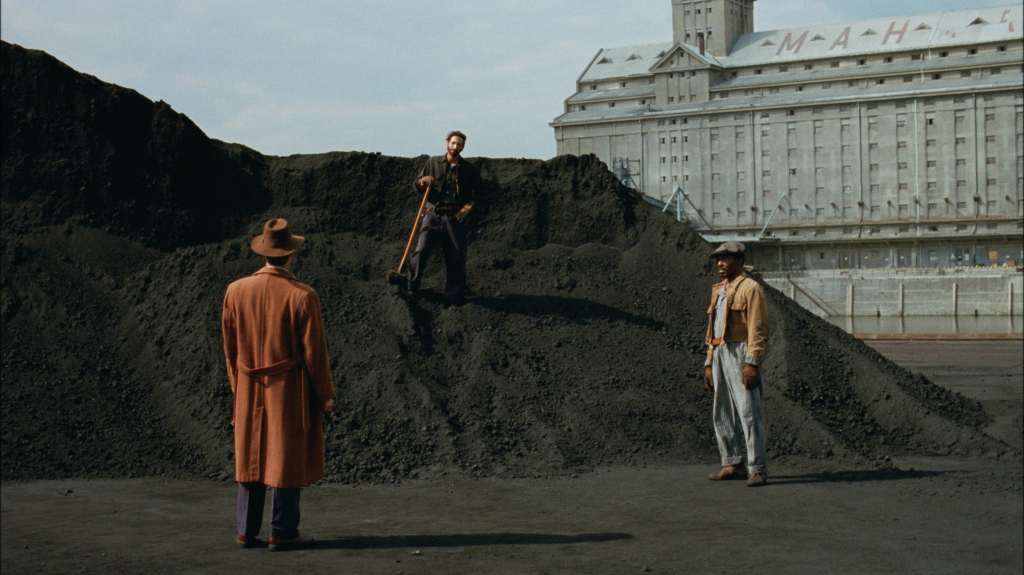
Raw, unvarnished and monumental in form. Brady Corbet’s The Brutalist invokes the bold aesthetic it draws from, both visually and narratively, constructing a story that is weighted and ambitious. Captured on VistaVision and projected on 70mm film, the imposing 215-minute runtime is befitting of it’s immense scale. Just as the concrete monoliths that define its title, the film starkly lays bare the immigrant struggle, burden of survival and the artistic response to trauma. Yet, much in the vein of its namesake, the film’s thematic intent with striking ideas related to assimilation, oppression and resistance is often undermined by a cold, unyielding execution that blunts its overall impact and emotional core. What begins as a richly textured exploration of survival and art erodes into something far simpler, duller and ultimately less enduring.
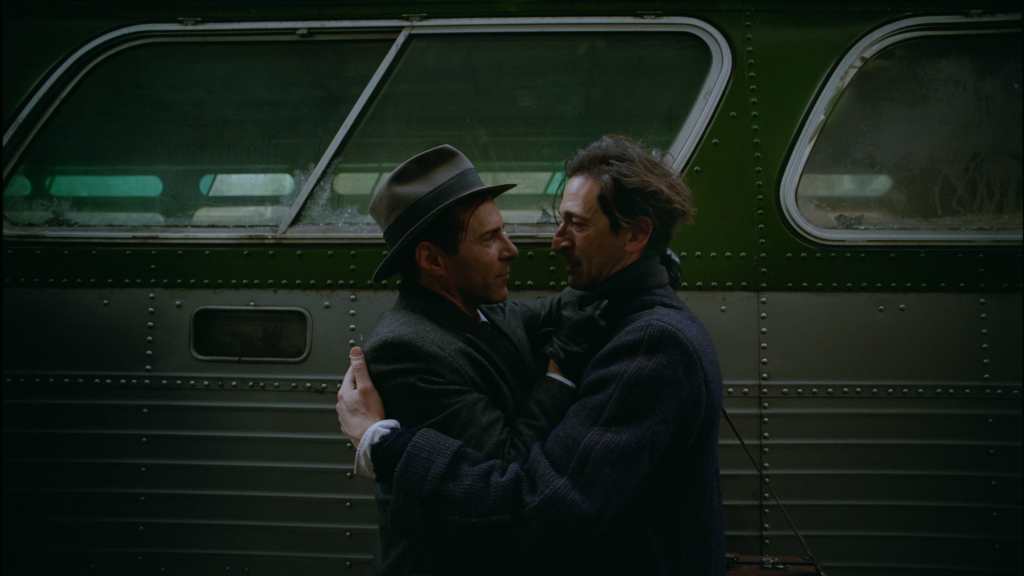
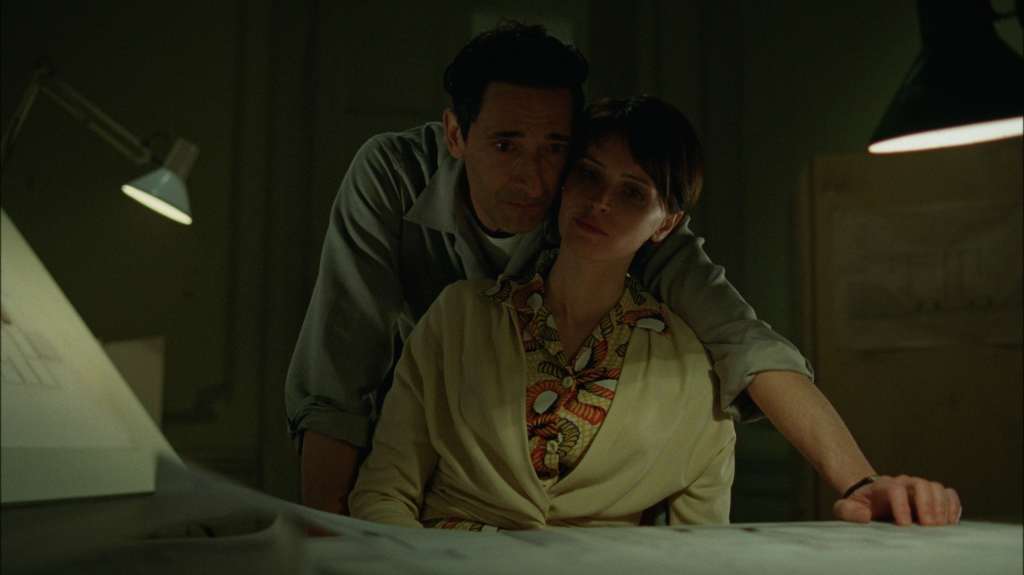
The slow-burn epic follows László Toth (Adrien Brody), a Hungarian-Jewish architect and Holocaust Survivor who emigrates to the United States in the aftermath following World War II. Having been forcibly separated from his wife, Erzsébet (Felicity Jones), during the chaos of the war, László is determined to rebuild his life and identity in America.
Adrien Brody gives a powerful, grounded performance as the striving architect, soundly embodying the trauma, resilience and ambition met with struggle both past and present. Felicity Jones brings a poignant, albeit understated, role, elevating her confined, underutilized part in the epic scope of the film. Opposite the two, Guy Pearce steals the show with a chilling and composed portrayal of the affluent Harrison Van Baren, perfectly masking the insidious and manipulative motives with charm. Performances are matched by incredibly well crafted cinematography and a resilient, haunting score accentuating the tension between progress and despair. Sound and visuals imbue the narrative with a visceral, unyielding tone. The story itself is divided into two parts separated by an intermission. While the aforementioned stylistic elements stay consistent, thematic cohesion shows signs of falter between the two.
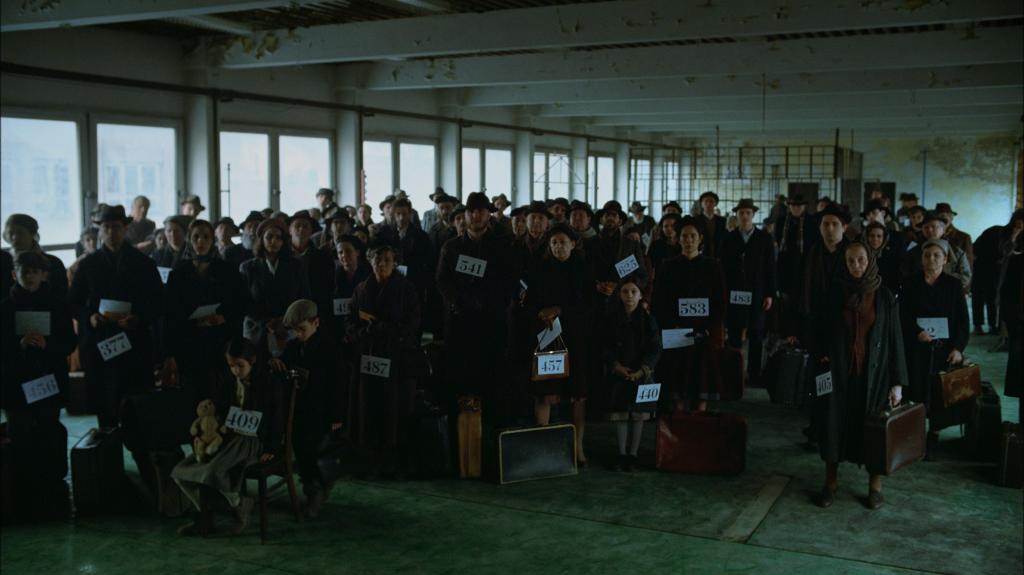
It is clear that the themes presented by director Brady Corbet largely revolve around Jewish diaspora, assimilation, persecution, oppression, and intersections of art and capital, although the balance of these ideas shifts greatly from the first half to the second. The films opening sequence bridges László’s escape from a traumatic past in Europe, navigating the dark vessel that carried him to a new life, emerging to the sharp contrasting light of opportunity. The transition captures the duality of the immigrant experience, suffocating pain and struggle met with a brighter vision suggesting possibility, yet the very first representation of America is marked by a inverted image of the Statue of Liberty, symbolizing the subversive reimagining of the American Dream that would follow.
The clash of aspiration and the harsh realities of American capitalism frames the country as less of a sanctuary, and more-so as a place that offers new forms of struggle, exploitation and disillusionment. An entrapment of artistic talent commodified and a sacrifice of personal integrity. The cost of conditional freedom for those that are ambitious and required to labour for forces that oppress them. Capitalist greed takes the form of wealthy patron, Harrison Van Buren (Guy Pearce), recognizing Laszlo’s talents and commissioning a sprawling monument to be built as a tribute to his late mother and, more fittingly, as a testament of power.
The most striking element of the film is the exploration of tension between artistic potential and capitalist forces of corporate greed in the face of broader experiences that many immigrants are met with in their attempt to make a mark on the system, especially in the context of a post-war, Jewish perspective. The film introduces this idea in a compelling dialogue between the two opposing figures, as László describes the motivations behind his architecture and designs as a “political stimulus.” The creation of bold, imposing structures modeled to reflect the memory of oppressive captivity in concentration camps is very powerful. The narrative frames architecture as a form of resistance, resilience and a reclamation of power from systems that sought to erase him. A statement of endurance and an agency through creation. The potential of a story on artistic defiance of this nature had been very promising, but was unfortunate shift in the films focus during its latter half ultimately undercut its impact.
Throughout the second part of the film, the weight of its themes grow increasingly oppressive and dilutes character dynamics to heavy handed one-dimensional caricatures. What beings as a nuances portrayal of artistic and personal struggle against deeply systemic oppressions transforms into a jarring, simplistic dichotomy, specifically manifested in a violent act that seems completely unnecessary and forced, rendering the story’s purpose reductive. It is a pivotal moment that sacrifices complexity for blunt extremity. This problem is exacerbated by the over-simplification of László and Erzsébet Toth as idealized victims, positioning a departure for Israel as the sole solution to hostility faced in American. Majority of the film brushes over the role and idea of “Israel,” beyond its significance to a historical backdrop.
It is very clear that The Brutalist has no true intention of engaging with contentious political realities surrounding the area or the ramifications of its existence on Palestinian land and brutality towards Palestinian people. Simultaneously however, the apartheid state is indirectly presented as a utopian sanctuary from oppression, without ever grappling with the oppressive actions Israel itself has perpetuated. The omission of a larger context of Israeli settler colonialism, occupation and ongoing displacement of Palestinians is glaring considering the films exploration of historical trauma, migration and survival. It is a silence that is deliberate and troubling. However, this inclusion can also be seen from the opposite perspective. This film can also be seen as a presentation of the natural development of zionism as a manipulated idea of escape from an immovable force of oppression. In the words of László, distraught and emotional, pleading to his wife.
They don’t want us here.
It is a notion that the oppressive forces need not ever be engaged with to a substantial degree enough to truly right the wrongs of inequality, discrimination and anti-semitism. The pessimistic view of hopelessness, weaponized to fuel the existence of an illusion of escape from a problem that will not be solved. In the epilogue, we see that László has grown old and decrepit, as his niece gives a speech at an event honoring his life’s work. His art, design and architecture are manipulated to serve her political ideologies. Ideologies that had not fueled his legacy throughout the film, rather the distortion of his vulnerability. László is once again, helpless.
The issue with this film is not necessarily that it is Zionist agitprop. The issue with this film is that it can be. The outright apolitical presentation of those ideas in this film lead it open to interpretation without providing a complete, compelling argument for either side. In an interview, director Brady Corbet stressed the importance of constructing films with themes that endure and stay relevant from production, to release and after. In contemporary times of unrest and conflict, a more driven perspective on such a relevant issue would have served the film better regardless of its short presence in the monumental 3.5 hour runtime. Nevertheless, The Brutalist is a technical masterpiece with strong performances and interesting ideas. It is a slab of something rough, cracked and unpolished, but undeniably solid, heavy and raw.
4/5


 Cinema Debate
You must be logged in to post a comment.