
History hangs heavy in the American Deep South, where stories are born from deep wounds and songs carry the weight of sorrow and survival. The blood and faith that soaks the soil gives rise to dreams of freedom and defiance. It is of this restless land that a story is told of a man, met by the devil at a Mississippi crossroad. Guitar in hand, he struck a bargain, selling his soul for the gift of music that’d would haunt this world forever.

Ryan Coogler’s Sinners marks the directors fifth feature film, the first of which being an entirely original project outside of works based around real events or within a franchise, while simultaneously being his greatest achievement yet. The genre-defying film is a deep exploration of racial trauma, the fight for freedom, family and the transformative power of music.
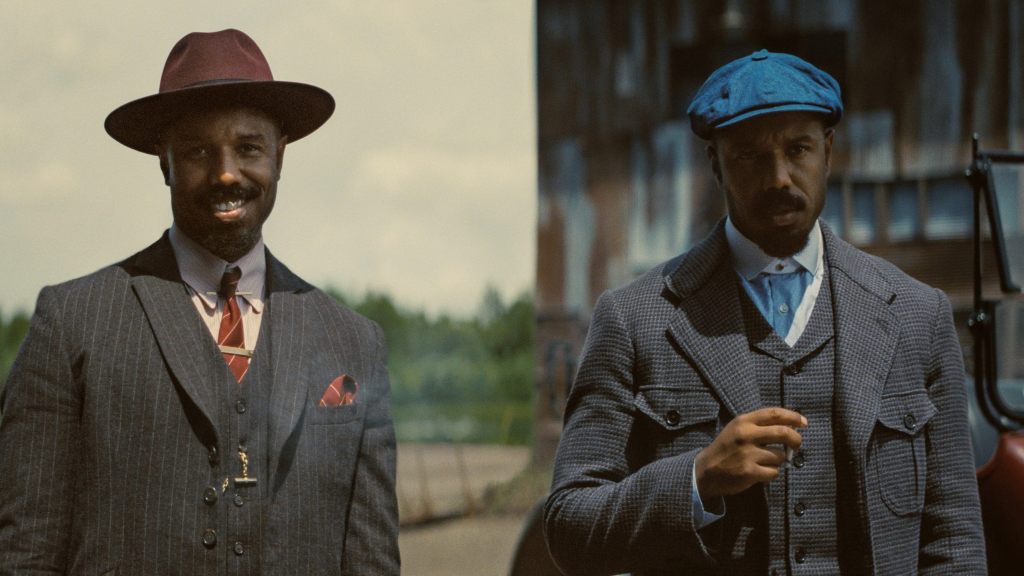
Set in the early 1930’s. the film follows twin brothers Smoke and Stack (both portrayed by Michael B. Jordan) as they return to their hometown in Mississippi with plans of opening a juke joint, only to be confronted by a lurking, supernatural evil. Hailee Steinfeld delivers a compelling performance as Mary, Stack’s former lover, whose role adds emotion depth to the narrative, pushing the central conflict while embodying themes of forbidden desire and lingering pain. Still, in his debut role, Miles Caton emerges as the films true anchor, delivering a breakout performance as young blues artist Sammie Moore. The emotional and spiritual centre of Sammie’s character becomes the catalyst for which Sinners explores its deepest tensions. Suspended between salvation and damnation, Sammie is caught between the church of his preacher father and the seductive lure of the juke joint – both sanctuaries in their own right. The string of his guitar becomes the spiritual tightrope he must walk, with each note a prayer and a rebellion. Music becomes a voice for the voiceless in a pocket freedom carved out on stolen land. It’s an escape from injustice, a sound of resistance and a lifeline beyond blood. Sinners understands this intimately and depicts its liberation in a way that transcends the screen.

In visuals and score, Sinners is just as bold as it is in storytelling. The atmosphere is tense and evocative. The heat-hazed south and eerie night is perfectly framed. In its entirety, the film is deeply enhanced by Ludwig Göransson’s breathtaking score. It is a timeless mix of music and genre that breathes throughout every aspect of the film. The score reflects a liber ton and spiritual weight that amplifies the emotional core and depth of the film’s narrative in a way that, at times, is more visceral than anything ever seen in film.
The richness of Sinners’ themes cannot be overstated. Its ideas are historic, systemic and pervasive. It is a bold reimagining of a folklore genre that elevates the vampire myth beyond cliche and into something urgent and relevant. It is faithful to the root of their emergence as stories designed to warn, control, and define danger of what is deemed uncivil or outside the bounds of what is considered unacceptable. The projection of fear onto the unfamiliar, the “different,” is a mirror of the vilification blackness in America. Yet the vampires also offer a sharp duality. The vampires are not simply monsters, but parasites of culture wearing a mask of kinship and offering a seductive illusion of freedom. They reflect a complex reality of true autonomy when survival demands compromise. These creatures don’t simply haunt – they entice, exploit and offer a conditional freedom through assimilation or submission. Offers of false freedom only made and to be accepted under the shadow of coercion. An offer of community, connection and life hollowed out and stripped away of history, identity and agency. It is a salvation meant to mimic peace, repackaging exploitation as liberation. Culture without context, stories without struggle, and music without soul. Ryan Coogler uses this dynamic to interrogate the nature of liberty under oppression and to reflect systems of oppression that claim to aid and understand while simultaneously reinforcing inequality. What makes the vampires so compelling is the truth in the struggle that they acknowledge, the recognition of the worlds harsh conditions. Truths they manipulate for their own price of freedom, desperation and cultural appropriation.

Sinners is a monument to cinema, one that may easily go on to become an all-time classic. It is stunning and rare in its ambition and resonance. It’s a searing, soulful example of thematic maximalism. Ryan Coogler crafts a film that is intimate and immensely dense – rooted in cultural memory and creativity that sings with urgency, resistance, redemption. Few film in recent years have been so bold. Even fewer have left behind a mark so deep it draws blood.
5/5



 Cinema Debate
You must be logged in to post a comment.